



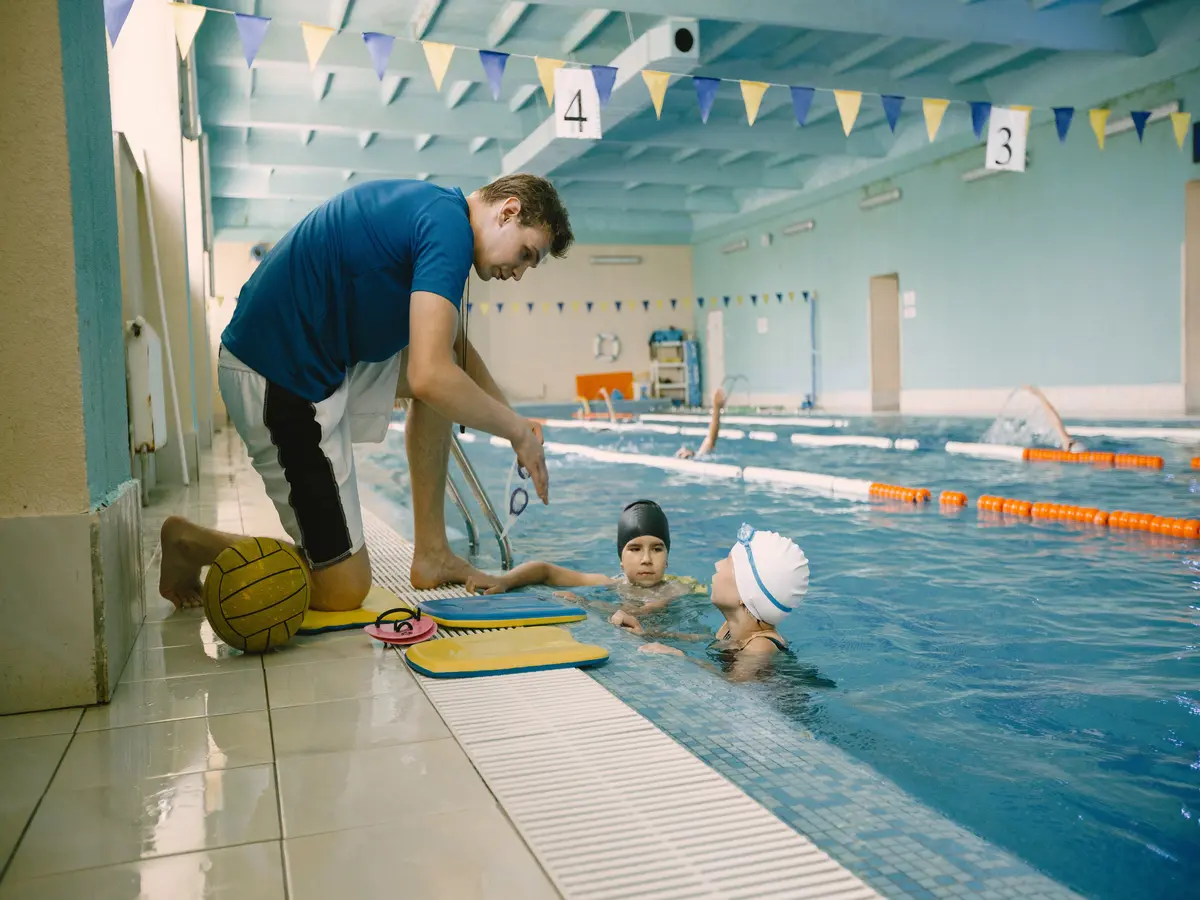
Water brings happiness, adventure and lifetime memories to kids. Pool parties and beach vacation are some of the activities that kids are naturally attracted to. But there with that attraction comes risk. Education about safety on and near water is not a choice, but must be a necessity when educating children. This is where swimming lessons among children are essential.

When children are taken into an organized instruction, it does not merely educate them on how to float or paddle. It fosters trust, enhances awareness and considerably increases the general water safety of children. This paper will look into ways that swim lessons lower risk, enhance child safety and provide life-saving skills that last a lifetime.
The Growing Need for Water Safety
A thousand families are influenced by water-related accidents annually. Drowning is also one of the major causes of accidental injury in children. Most of these accidents are a fast and silent occurrence and they can be very common in a known setting such as home pools.
The remedy is proactive education. Children understand how to manoeuvre safely through water which makes them better prepared in case of an emergency. Awareness, supervision, and skill development are the beginning of drowning prevention, and swim instruction is one of them.
Building Essential Survival Skills
The acquisition of the core survival skills is one of the largest benefits of Swim lessons for kids. These include:
- Floating on the back
- Treading water
- Safety of entry and exit methods
- Breath control
- Rolling over to breathe
- Swimming to safety
These basic skills can be the difference between panicking and control when faced with an unpredicted circumstance. Children who attend regular swim lessons figure out how to remain composed and save their own energy and make prudent choices in the water.
Simple skills can make the children significantly safer on water. A child who can support him/herself has a much better opportunity to be safe and wait to receive assistance.
Early Exposure Reduces Fear and Panic
Water accidents are usually attributed to fear. In a case where a child slips into the water accidentally, panic will ensue fast. Panic results in flawed judgement and fatigue.
Kids swimming classes expose kids to water slowly and in a non-infringing manner. They become familiar with:
- The feeling of water upon their face
- Submerging and resurfacing
- Controlled breathing
- Safe movement
This acquaintance alleviates anxiety and develops comfort. Children are confident and calm when responding better in difficult situations.
Also Read : Calculating ROI for Software Projects in Dallas
Professional Instruction Improves Technique
Parents usually attempt to make their children learn how to swim independently. Although the intentions of informal instruction are not bad, it might neglect important safety methods. Professional instructors in swimming classes are certified to teach the age-related methods with safety in mind.
Weaknesses programs are focused on:
- Proper body positioning
- Well coordinated arm and leg movements
- Safe breathing patterns
- Identification of hazardous situations
Professional swimming training would make sure that children will not simply play in water, they actually learn to swim properly and in a safe way.
Enhancing Awareness of Water Risks
Education in swimming is not so much about physical skills. It also educates children on possible dangers. Instructors often discuss:
- The significance of adult supervision
- Pool rules and boundaries
- Why exercising by water is unsafe
- The risks of swimming alone
- Understanding water depth
The education enhances awareness of child safety. Young people that have knowledge about risk tend to be more responsible near water.
Strengthening Physical Development
Although safety is the number one priority, safety also has the value of physical benefits, which enhance safety indirectly through swim lessons on kids.
Swimming improves:
- Coordination
- Balance
- Muscle strength
- Cardiovascular health
- Endurance
A child who is physically stronger can easily tread water, swim a longer distance and recover after falling on the water. The increased stamina is directly related to drowning prevention since the children would be able to support themselves longer in the event of a need.
Boosting Confidence and Independence
Trust is a very big feature in water safety. Children that have doubts about their capabilities might get hesitant or become panic-stricken. Conversely, the lack of proper training in overconfidence may be dangerous as well.
Children swimming lessons make the appropriate balance. In incremental attainment, children can be confident according to the actual skills acquisition. They learn new techniques and develop:
- Self-trust
- Discipline
- Focus
- Responsibility
This feeling of competence is not confined to the pool and supports the child safety behaviors in general in everyday life.
Teaching Emergency Response Skills
There are numerous swimming lessons that involve simple safety exercises and first aid. Children may learn:
- How to call for help
- The way to access a flotation device
- Basic response to rescue without risking their lives
- How to act in case another person is in distress
Although toddlers have nothing to do with rescues, the knowledge of what to do in case of an emergency raises awareness and preparedness.
Kids swim lessons may involve simulated activities that strengthen impulsive thinking and non-panic responses, which are essentials of the water safety of kids.
Supporting Lifelong Healthy Habits
It is not a childhood skill that has to be practiced; it is a life-long activity. Children who learn at an early age can achieve more because:
- Participate in water sports
- Join swim teams
- Recreation swimming in harmony
- Maintain active lifestyles
Lifetime swimming capacity improves future security. Adults who did not receive the instruction of how to swim are still in a greater danger during the water-related situations.
Early training of children on how to swim will guarantee that they will take these skills into their adolescence and adulthood.
Social and Emotional Growth
Social benefits are also obtained through kids swimming classes. Group instruction will teach children to:
- Follow directions
- Take turns
- Encourage peers
- Respect rules
Restricted by these social skills are discipline and attention that leads to safer behavior near water.
Moreover, the ability to overcome minor obstacles such as swimming the pool the first time is a resilience bulb. Children are taught that they need to practice in order to improve and that they need to work in order to achieve success.
Structured Progression Ensures Skill Mastery
Swim training programs are conducted in a progressive manner. Children move from:
- Water comfort and simple floating
- Assisted movement
- Independent swimming
- Stroke development
- Intensive stamina and protection procedures
This systematic model makes the skills to be layered correctly. It is easy to go too fast and leave a hole in the skill, though a slow progression of the technique and safety consciousness builds up.
Swimming lessons tailored to the various age groups such as infants, toddlers, preschoolers, and school age children will make sure that the instructions are based on the level of development.
The Role of Parents in Reinforcing Safety
Although the lesson of swimming among the children is potent, the participation of the parents is important. Supervision should not be replaced by lessons.
Water safety may be reinforced by parents:
- Always staying under close scrutiny
- Placing barriers and alarms around the pools
- Teaching clear pool rules
- Promoting a regular practice
- Modeling safe behavior
Child safety level is enhanced when formal education and parental attention collide.
Reducing Long-Term Risk Through Early Education
The studies consistently indicate that the early introduction to the training in the structure of the swim training decreases the cases of drowning. The children that have gone through the lessons have a lower chance of being involved in fatal water accidents than those who have never been taught.
The sooner the children master the art of swimming, the more instinctive and natural their performance. Early practice develops muscle memory that is very important during an emergency.
However, in this case, although children may not grow to be competitive swimmers, the sunlight safety skills significantly enhance the water safety of the children in the real world.
Also Read : Fintech Software Development 2026: Key Insights
Addressing Common Misconceptions
There are also certain parents who are not willing to send their children to swimming classes because of the popular myths:
“My child is too young.”
Several programs provide infants and toddlers with a safe introduction into the water with parent-assisted learning.
“We don’t have a pool.”
Exposure to water occurs in most settings such as vacations, the homes of friends, community centers, lakes, and beaches.
“Floaties are enough.”
Flotation equipment is prone to failure or false security. They cannot be used in place of real swimming abilities.
The correct training in swimming by professionals has helped to counter these myths by focusing more on the actual building of skills rather than the short term solutions.
Creating a Culture of Water Safety
Communities that make swimming lessons to kids a priority, enable them to establish an environment in which water safety becomes a culture. Schools, recreation centers and local pools with swimming education programs are elements of the greater drowning prevention programs.
The more universal and familiar swimming training is, the less water accidents appear.
Teaching children how to swim is not a personal option but a health investment of the people.
Final Thoughts
Water may be amazing and wicked. Preparation is the secret of enjoying and being safe at the same time. Kids swimming lessons are not just another activity that imparts to a child recreational skills but instead life-saving skills, confidence and awareness.
Physical endurance strength, emergency response, and associated aspects are all enhanced by structured kids swimming classes to ensure water safety for children. They lessen the risk, enable safety of children, and are highly significant in preventing drowning.
All children should be able to feel safe and secure around water. One of the most preventive and protective actions that a parent can take is enrolling in swimming classes.
A lifetime of protection can be guaranteed to a child through investing in swim training.